The Expanded format stretches back to the Black & White era, which started in 2011. The game has changed a lot in this time, with many types of Pokémon (EX, GX, V, etc.) being introduced, then phased out of the game. All these different mechanics coexist in Expanded. Honestly, you can find almost everything you need to know by reading the cards themselves, but if you're new to the game, you might be looking for a recap of all the types of cards you might encounter in Expanded. If that's the case, this page will answer all your questions!
Note that while there have been changes to the rules over the years, Expanded is not fixed in time (unlike retro formats), so it is played with the current rules. As of 2026, that means that, just like in Standard, the player going first cannot attack or play a Supporter on their first turn, and that Tool cards are not considered Item cards (even if that was the case at the time they were printed).
Pokémon-EX: Not to be confused with Pokémon ex, Pokémon-EX were introduced in Next Destinies (the fourth set of the Black & White block) and remained in the game until the end of the XY block. They are simply Basic Pokémon that are worth two Prize cards instead of one when they are KO'd. While they were almost exclusively Legendary Pokémon throughout the Black & White era, other Pokémon then started being printed as Pokémon-EX as well, but always as Basic Pokémon, even if the Pokémon is normally an evolved form. Pokémon-EX are Rule Box Pokémon. Due to power creep, they are mostly irrelevant in Expanded, with some rare exceptions.
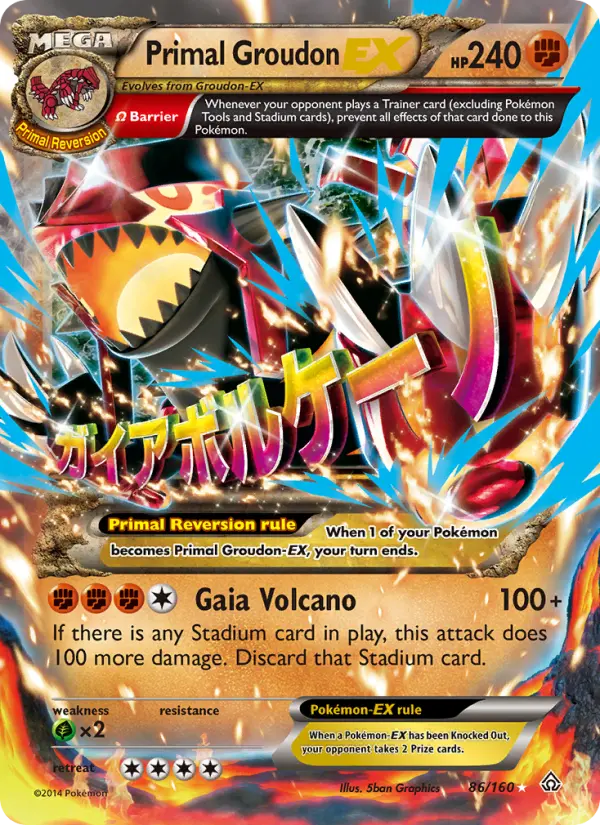
- M Pokémon-EX: Introduced in XY, M Pokémon-EX are two-Prize Pokémon that evolve from Pokémon-EX. Their Evolution stage is "Mega", so they are not considered Stage 1 Pokémon, despite evolving from Basic Pokémon. When a player evolves a Pokémon-EX into a M Pokémon-EX, their turn ends, unless that Pokémon has the corresponding Spirit Link Tool card. M Pokémon-EX are a subset of Pokémon-EX, so any card that affects Pokémon-EX will affect M Pokémon-EX as well. M Pokémon-EX are Rule Box Pokémon.
Restored Pokémon: In the Black & White block, Fossil Pokémon don't evolve from Item cards; instead, they are Restored Pokémon, which is a new Evolution stage; they don't count as either Basic or Evolution Pokémon. They can only be put into play with the effect of their corresponding Fossil card. They don't particularly matter in Expanded, except that evolutions of Restored Pokémon are stage 1 Pokémon, so for example, Cradily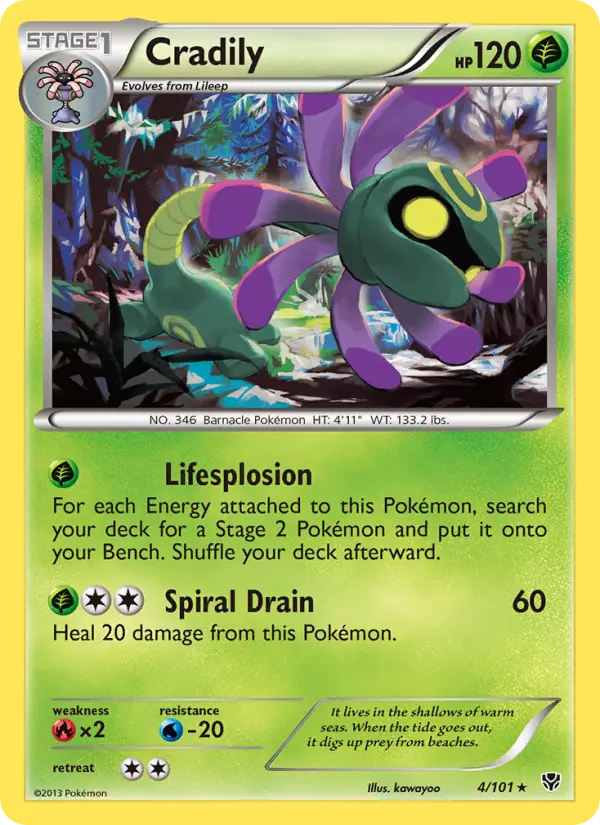 can evolve from Ditto ◇
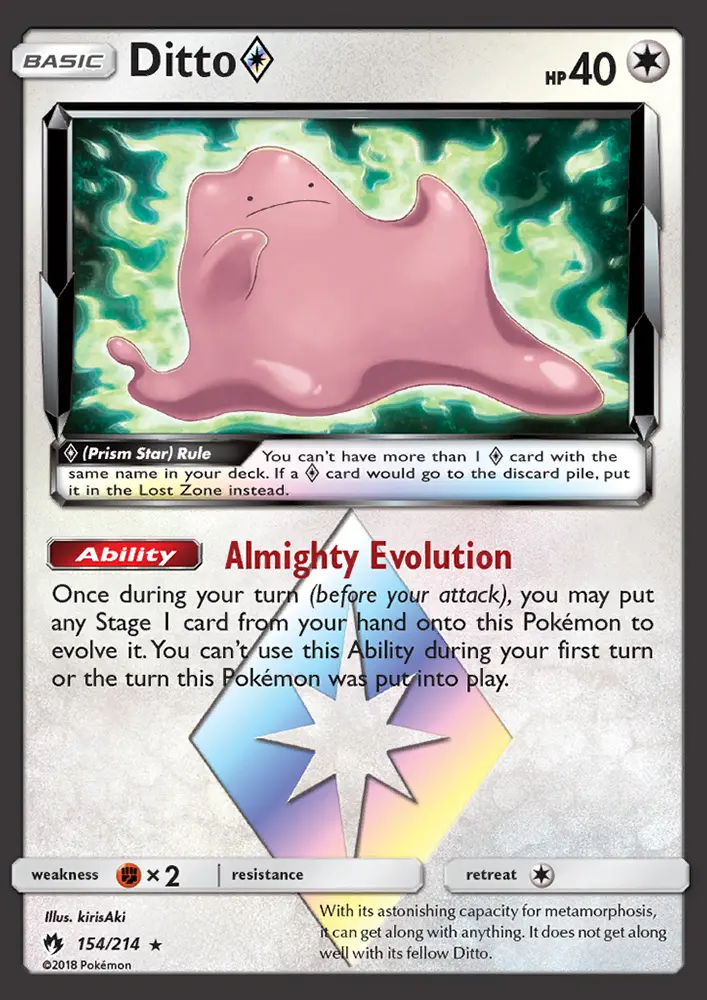 , even though Cradily is usually a stage 2 Pokémon.
ACE SPEC: While these have made a reappearance starting in Temporal Forces and are currently in the Standard format, Ace Spec cards were originally introduced in Boundaries Crossed. They are powerful Item or Tool cards (more recently, they can also be Energy or Stadium cards), but you can only play one Ace Spec in a deck. Just like in Standard, every Expanded deck should include an Ace Spec.
Ancient Traits: Introduced in Primal Clash (the fifth set of the XY block), Ancient Traits are special effects that appear on a few Pokémon. Despite being similar to Abilities, they are not considered Abilities (they are not shut down by Garbodor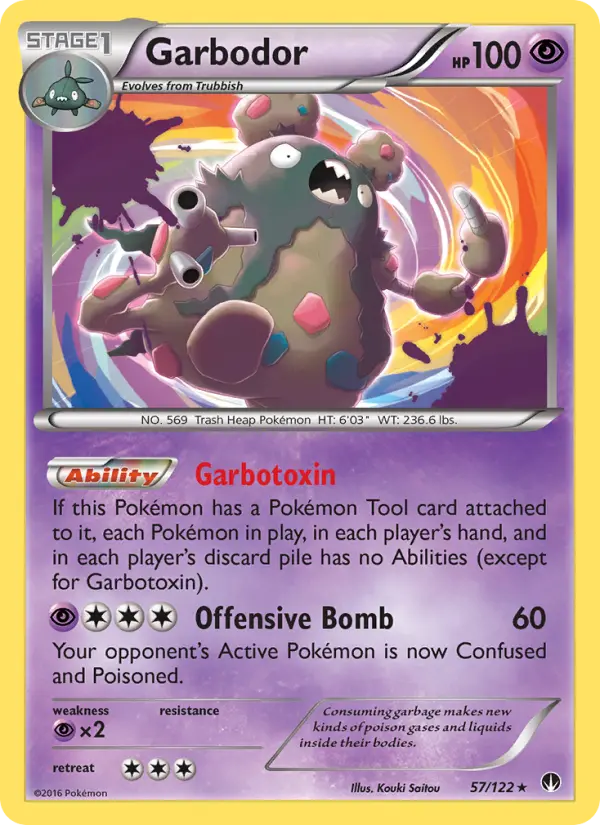 , for example). They also don't count as Rule Boxes. Some Ancient Traits are still relevant to Expanded today, especially Omega Barrage, which lets a Pokémon attack twice. This can be especially effective when combined with a Technical Machine.
Pokémon BREAK: Introduced in Breakpoint, Pokémon BREAK are a special type of Evolution cards that "upgrade" a Pokémon. A Pokémon BREAK retains the Abilities, attacks, Weakness, Resistance and Retreat Cost of the Pokémon underneath it, but upgrades its HP (and possibly changes its typing), and gives it an additional attack or Ability. Pokémon BREAK are Rule Box Pokémon. They are very rarely seen. Note that it's impossible to put a Pokémon BREAK directly in play with a card like Archie's Ace in the Hole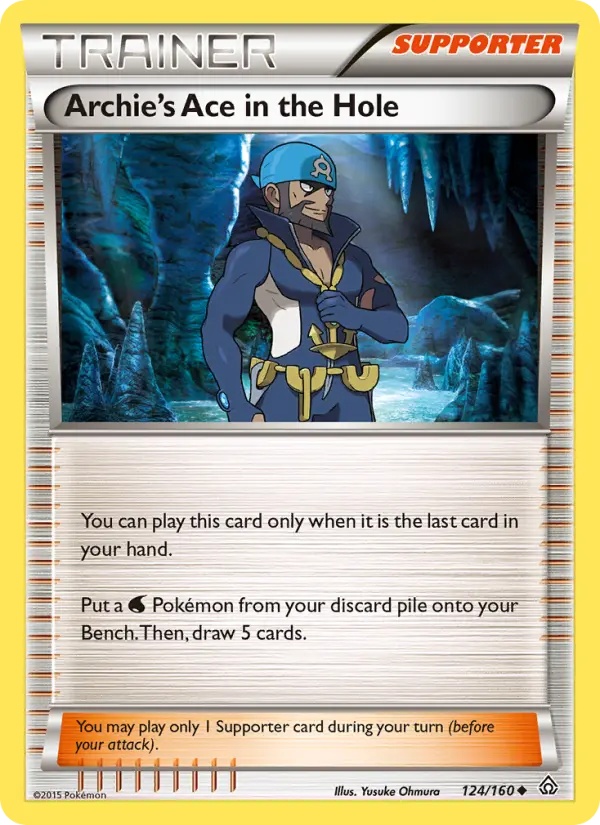 : it must evolve from another Pokémon.
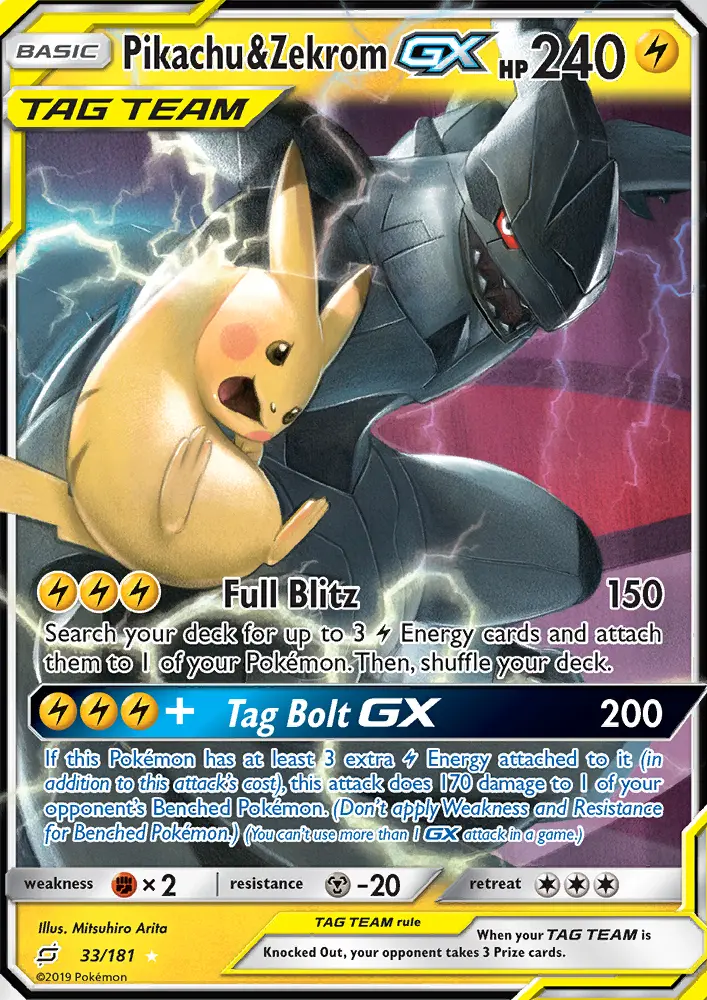
Pokémon-GX: In the Sun & Moon block, Pokémon-GX replace Pokémon-EX. They also give two Prizes when KO'd and count as Rule Box Pokémon, but they can be either Basic, Stage 1 or Stage 2 Pokémon. In addition, they each have a unique, powerful GX attack. A player can only use one GX attack per game. While most Pokémon-GX are too weak to compete in the format, some of them are still very viable, even if only for their GX attack, and some Pokémon-GX are staples of the format, played for their Ability.
- TAG TEAM: The first kind of Pokémon to give three Prizes when defeated, Tag Teams are a subset of Pokémon-GX introduced in the Team Up set. They feature a combination of two or three Pokémon, and are always considered Basic Pokémon. Like other Pokémon-GX, they have a GX attack, but with a twist: their GX attack has both a normal effect and a bonus effect that is only achieved if the Pokémon has additional Energy. Usually, in Expanded, these attacks are only worth using for their full effect.
In Cosmic Eclipse, TAG TEAM Supporter cards were also introduced. They don't have any specific rule associated with them; them being Tag Teams only matters for the purpose of Tag Call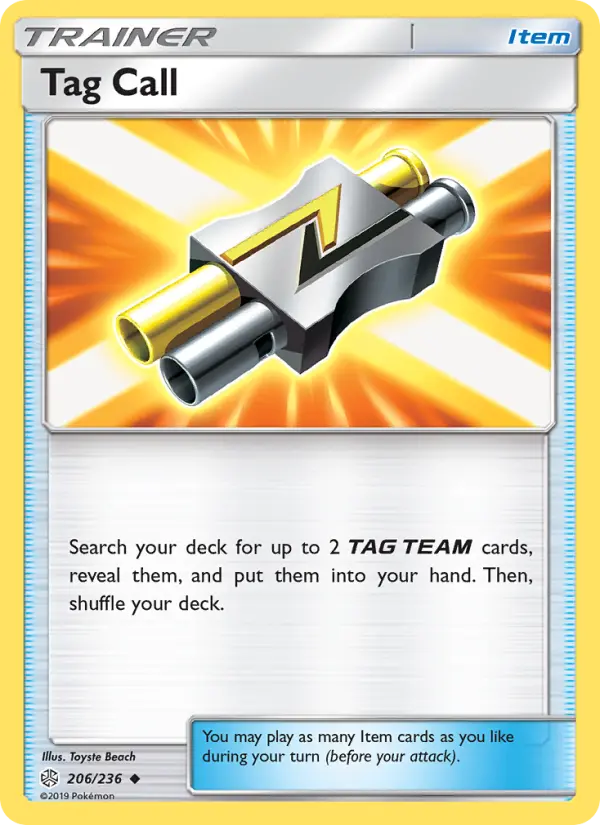 .
.
Prism Star: Introduced in Ultra Prism, Prism Star cards are powerful cards that are limited to one copy per deck (though a deck may have multiple Prism Star cards, if they are different). They are also sent to the Lost Zone when they should go to the discard, meaning they can't be retrieved to be used multiple times. Prism Star cards can be Pokémon, Supporter, Stadium or Energy cards. Prism Star Pokémon are Rule Box Pokémon, and are always Basic Pokémon.
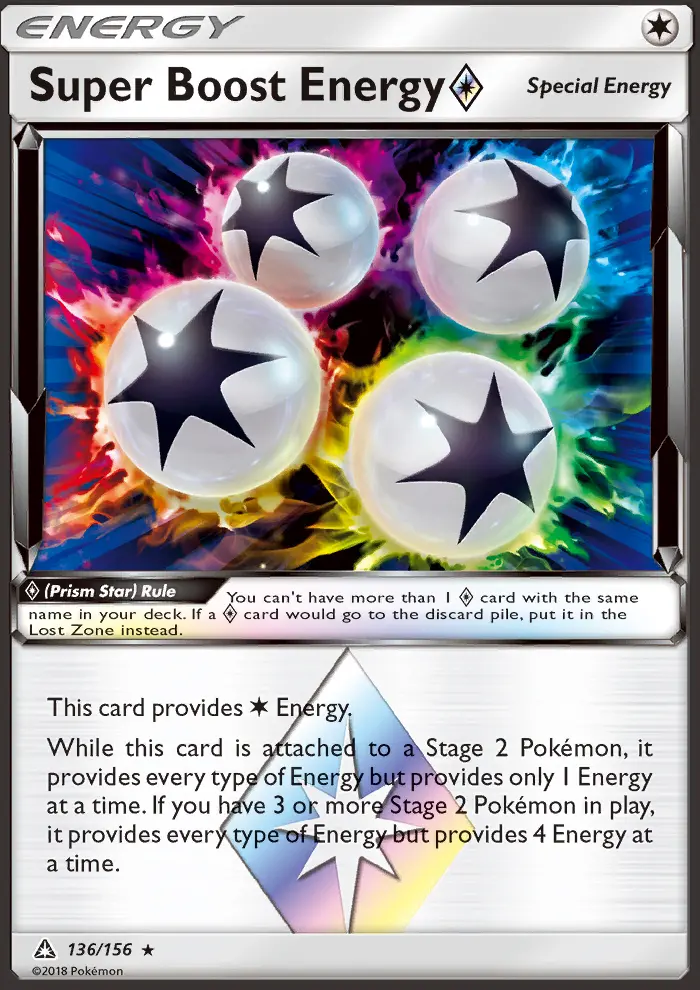
The Lost Zone: Not a type of card, the Lost Zone is a special zone, separate from the discard pile, from which cards don't come back. Introduced back in the Platinum era (before Expanded's starting point), the Lost Zone reappeared in the Sun & Moon era as the place where Prism Star cards go instead of the discard pile, then it was mentioned on multiple cards in the Lost Thunder set. It made a comeback in Lost Origin at the end of the Sword & Shield block, where some decks would aim to send cards to the Lost Zone to benefit from powerful effects.
Pokémon V: In the Sword & Shield era, Pokémon V replaced Pokémon-GX as the two-Prize Pokémon of the format. A typical Pokémon V is a Basic Pokémon, though there have been three different subtypes of Pokémon V:
-
Pokémon VMAX: Some Basic Pokémon V can evolve into Pokémon VMAX, which are their own Evolution stage. Pokémon VMAX give up three Prizes when Knocked Out.
-
Pokémon VSTAR: Starting in Brilliant Stars, some Basic Pokémon V can evolve into Pokémon VSTAR, which are also their own Evolution stage. They only give up two Prizes when Knocked Out. Moreover, Pokémon VSTAR each have a unique VSTAR Power, which can be either an attack or an Ability. A player may only use a VSTAR Power once per game. (This is independant of GX attacks, so you can use a GX attack and a VSTAR Power in the same game.) Some Tool cards also allow any Pokémon V to use a VSTAR Power, the most important one being Forest Seal Stone
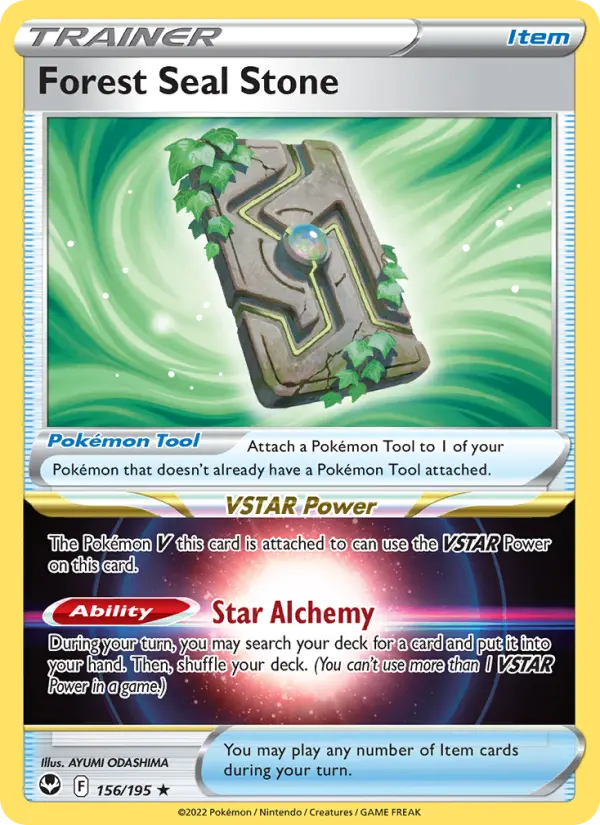 . Several of the game's best decks are built around VSTAR Pokémon and make good use of their VSTAR Power, and most other decks will include Forest Seal Stone, as long as they feature Pokémon V.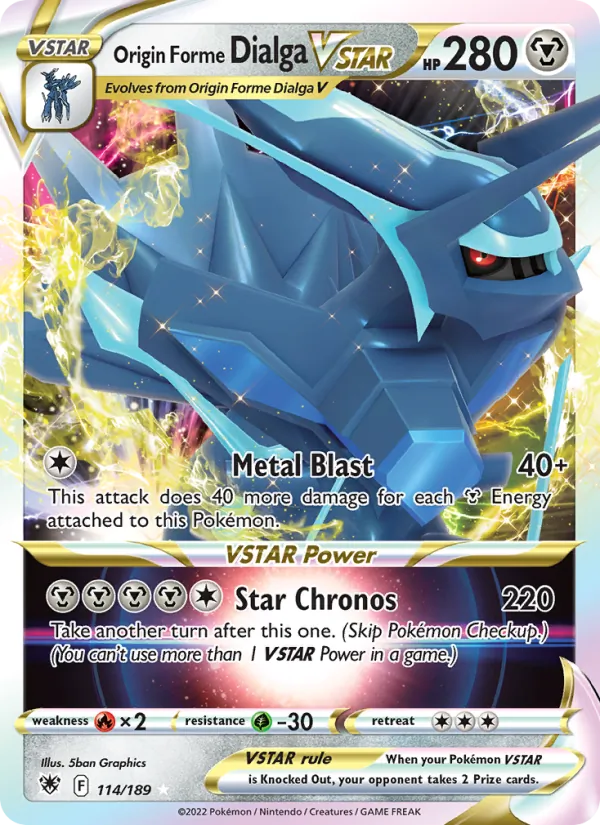
-
Pokémon V-UNION: Pokémon V-UNION are divided into four cards. Once per game, if these four cards are in the discard pile, they can be assembled and put into play. A Pokémon V-UNION gives up three Prizes when KO'd, and has multiple attacks and Abilities. Only five Pokémon V-UNION were ever printed, and while there have been attempts to make them work, for the most part, they're not very impactful.
Pokémon VSTAR, VMAX and V-UNION are all Pokémon V, and all Pokémon V are Rule Box Pokémon.
Radiant Pokémon: Introduced in Astral Radiance, Radiant Pokémon are powerful Basic Pokémon. You can only have one Radiant Pokémon per deck, and they are considered Rule Box Pokémon. These Pokémon's effects tend to be fairly specific, so many Expanded decks don't run any, but some of them are very relevant in the right deck.
Pokémon ex: Completely distinct from the Pokémon-EX of the Black & White and XY blocks, Pokémon ex were introduced back in the third generation of Pokémon, and came back in Scarlet & Violet. They give up two Prizes when KO'd, and can be either Basic, Stage 1 or Stage 2 Pokémon. They are Rule Box Pokémon.
- Tera Pokémon: Some Pokémon ex have the Tera attribute, which comes with a special rule that they don't take damage from attacks while on the Bench. Some cards also interact with Tera Pokémon ex specifically.
- Mega Evolution: Some Pokémon ex are Mega Evolution Pokémon, though they evolve from the Pokémon of the previous stage (e.g. Mega Gardevoir ex
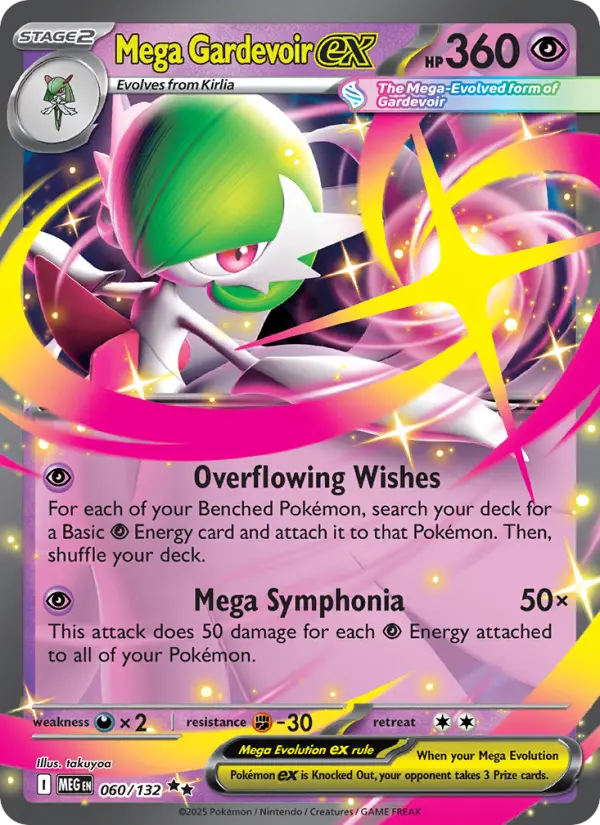 evolves from Kirlia, not Gardevoir). This means that some Mega Evolution Pokémon, like Mega Kangaskhan ex, are not Evolution Pokémon, but Basic Pokémon. Regardless of their stage, Mega Evolution Pokémon are a subset of Pokémon ex, but they give three Prizes when KO'd.
In addition to these categories, there are also some types of Pokémon that have a special tag that doesn't do anything in itself, but may be referred to by other cards. These include Team Plasma Pokémon, Ultra Beasts, Battle Styles Pokémon, and Ancient and Future Pokémon. There are no particular rules associated with these cards, and they are not Rule Box Pokémon by themselves (though some can be, e.g. Buzzwole GX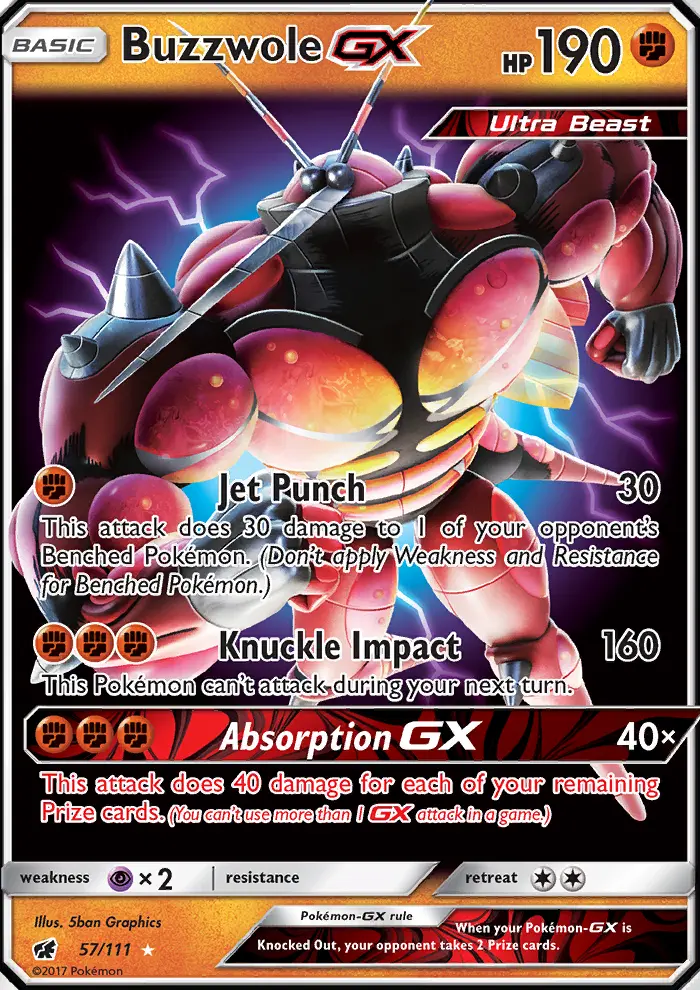 is a Rule Box Pokémon because it is GX, not because it is an Ultra Beast).